

Across most industries, businesses are turning to self-service kiosks to meet rising customer expectations. Whether it’s cutting down queues, improving privacy, or simply delivering a faster service, kiosks offer a smarter way to operate. Hospitality Technology found that 61% of people cited faster service when using a self-service kiosk.
As the industry grows, manufacturers are pushing the technology to help manage a wider variety of services from wayfinding kiosks and advertisement displays to smart visitor management systems.
Keep reading to find out the different types of kiosks that can help your business improve its service delivery.
1. Visitor Sign-in Kiosks
A visitor sign-in kiosk automates the process of welcoming and registering guests, contractors, and employees when they arrive at your premises. Rather than relying on a staffed reception desk, visitors can check themselves in quickly and efficiently, reducing wait times and freeing up your team to focus on higher-value tasks.
Modern visitor sign-in kiosks offer a range of features, including ID scanning, badge printing, pre-registration via QR code, and instant host notifications. They can also capture important data such as arrival times, the purpose of the visit, and signed agreements like DBAs, NDAs or health and safety declarations.
From a compliance perspective, a visitor sign-in kiosk provides a reliable digital record of everyone on your premises at any given time, essential for fire safety, audits, and safeguarding requirements.
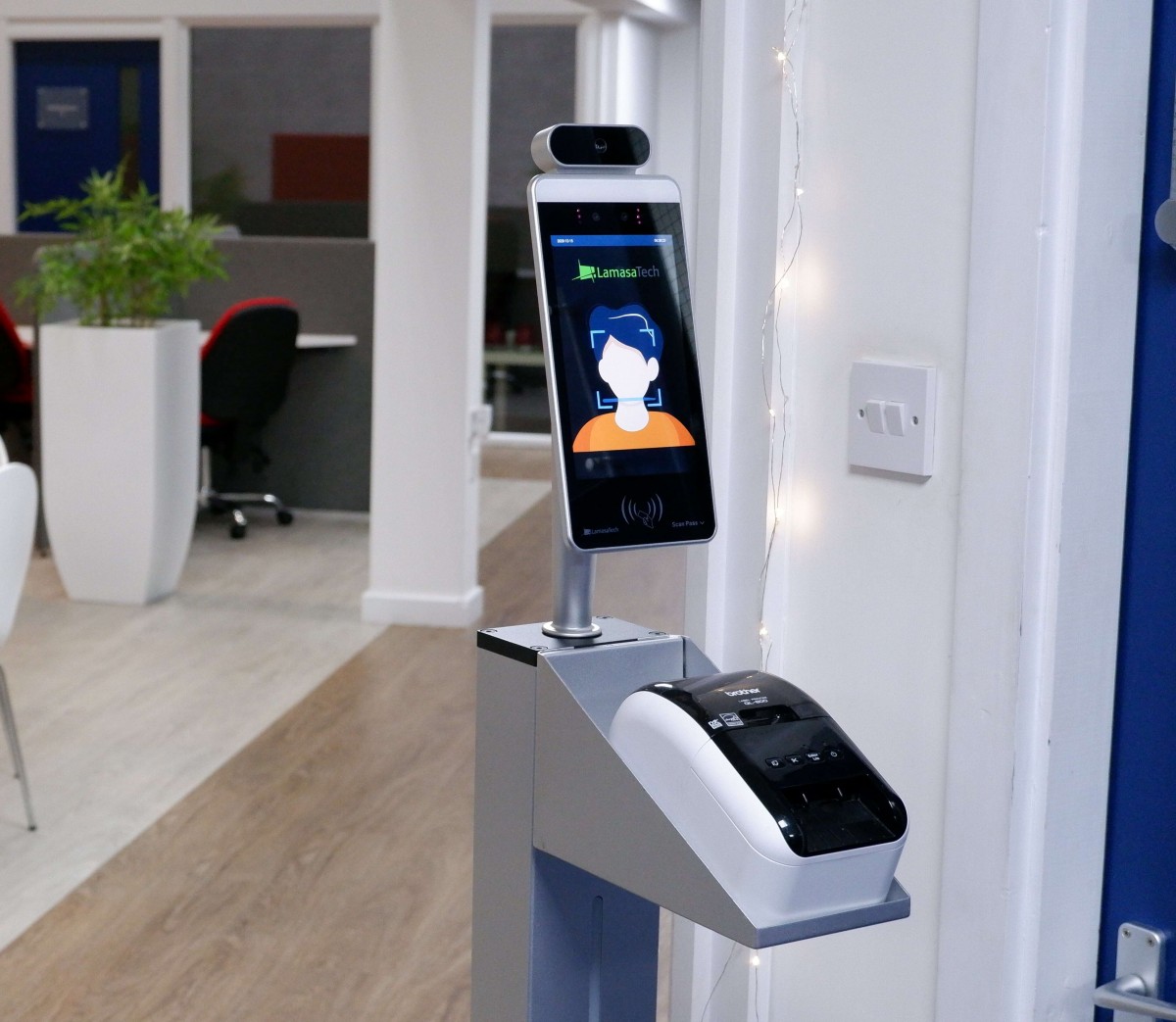
Contact us today about your visitor sign-in project, and we’ll help you implement a modern check-in solution.
Industries and businesses that can benefit most from visitor sign-in kiosks include:
- Offices and corporate headquarters
- Schools and educational institutions
- Healthcare facilities
- Manufacturing and warehousing sites
- Business complexes with multiple tenants
2. Self-Service Kiosks
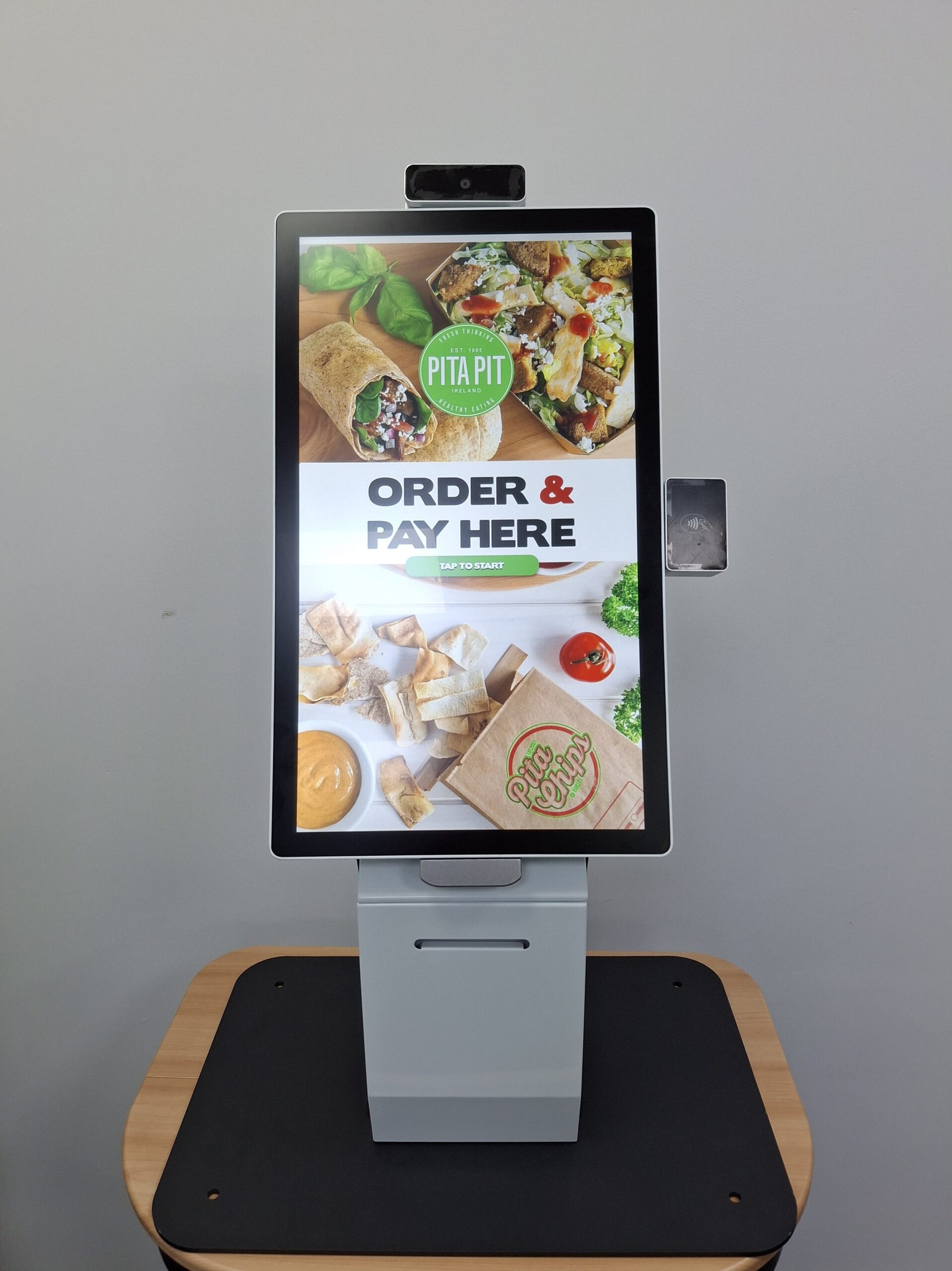
A self-service kiosk is a device that allows the user to directly interact with a company without the need to wait for an employee. They can be utilised in a variety of places, but common examples include buying tickets at a train station or restaurants offering a quick payment system. The intention is to speed the payment process up and reduce queue sizes. The NCR Corporation found that retailers offering self-service options saw a 40% decrease in customer wait times.
To use a self-service kiosk, you simply approach the screen, select the option you want, and complete the payment process.
In the healthcare industry, self-service kiosks are used as a way of checking in for an appointment, reducing the need for face-to-face interactions and easing the burden on administrative staff.
Talk with our expert team today and they’ll help you find the best solution for your organisation.
3. Information Kiosks
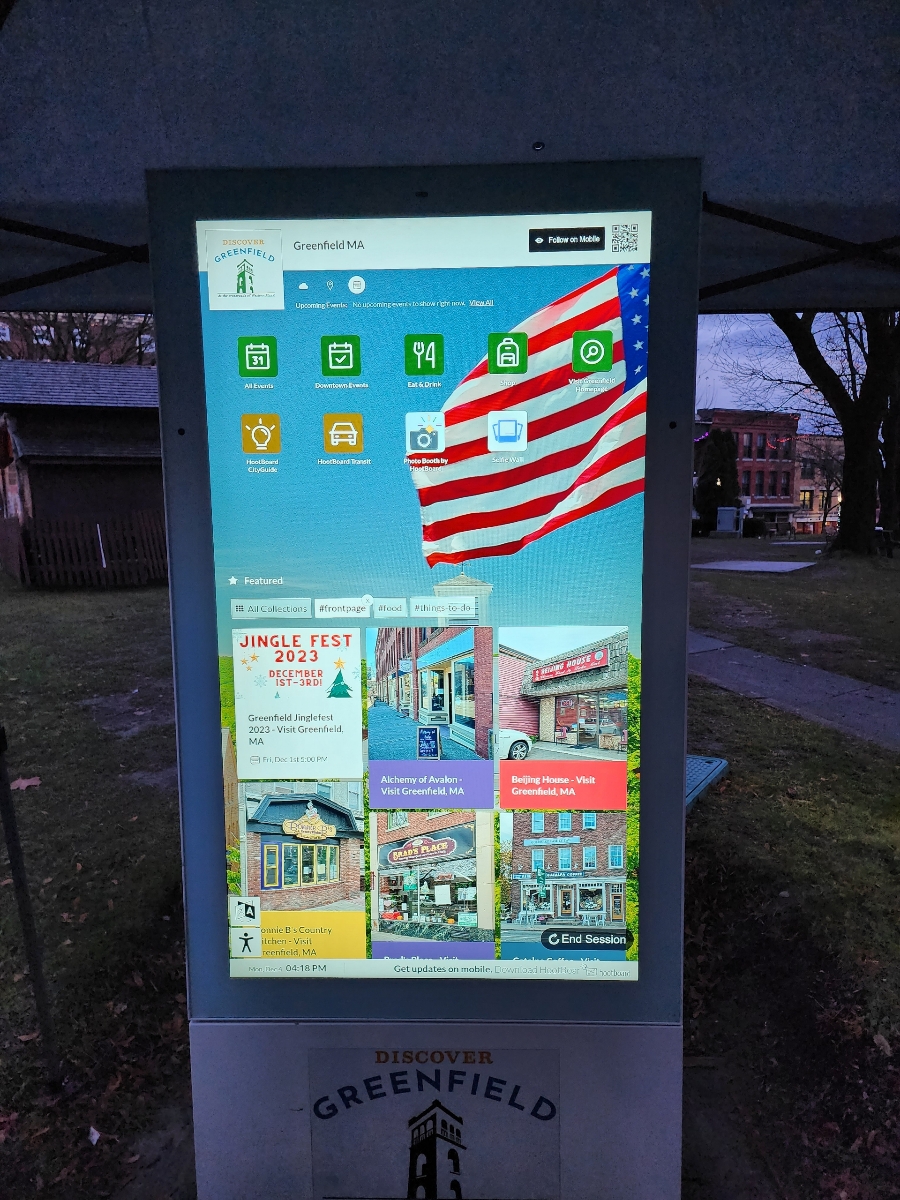
As the name suggests, an information kiosk provides the user with information. The key is that this information is clear and digestible. Although it should be easy to understand, it should also be detailed enough not to require an advisor.
When deciding on an information kiosk, the main question you’ll need to answer is whether you need interactivity. An interactive screen lets your users navigate different pages to find a range of information. A non-interactive kiosk will simply display the information you have set.
Tourist information points may utilise an interactive kiosk, allowing the user to choose the type of information displayed, such as nearby restaurants or activities. A healthcare centre, on the other hand, could use a non-interactive information kiosk to list important details about the practice.
Get in touch today and our team will help you find the perfect information kiosk for your requirements.
4. Advertisement Standing Displays
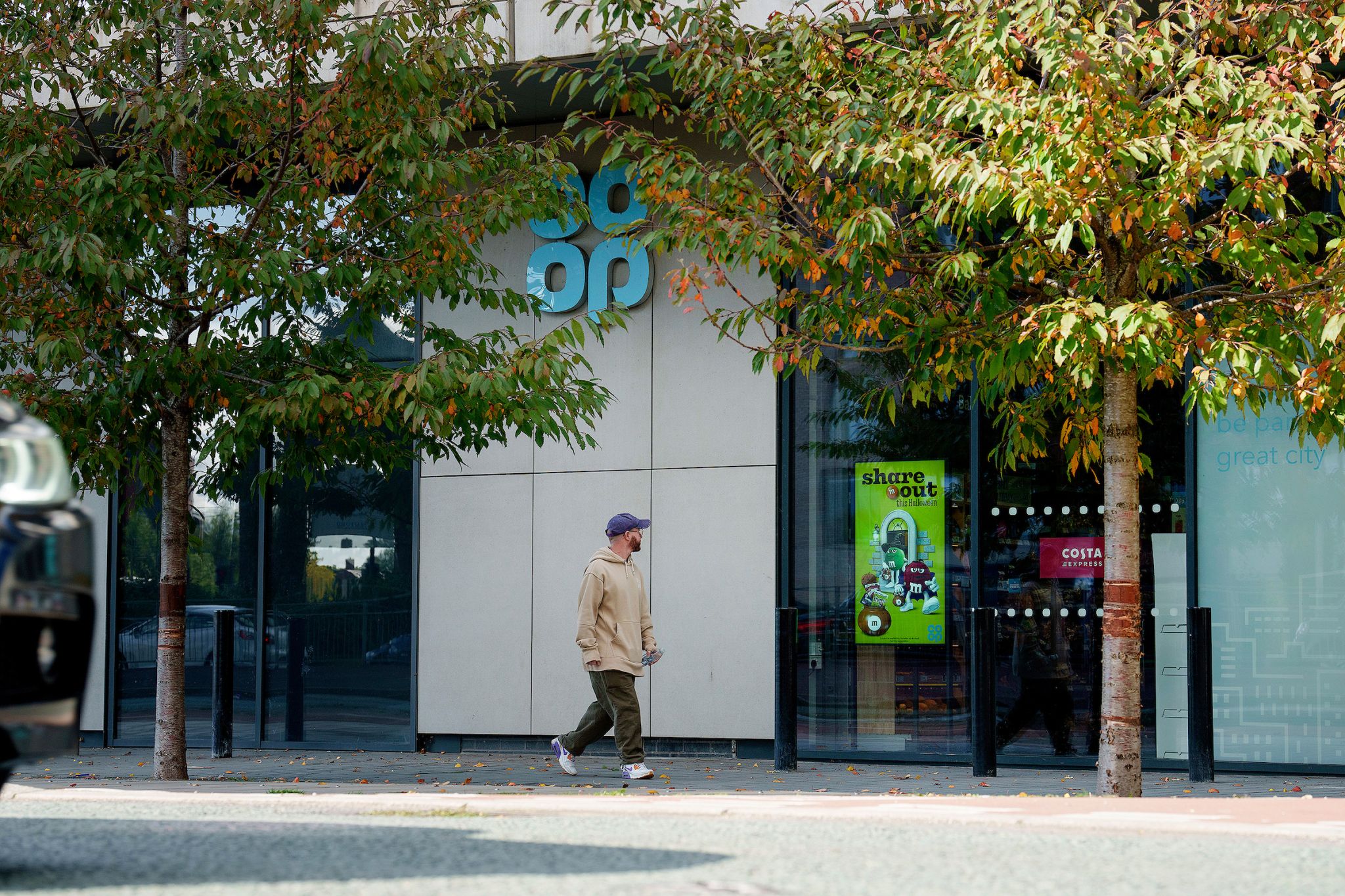
Sometimes referred to as advertising kiosks or totems, these standing displays are a way of presenting your digital signage. Advertisement displays are versatile in where they can be placed, from outside on the street to inside a shopping centre. By using a digital signage system, you can create advertisement content and schedule what appears on your display.
A recent development with advertisement displays is integration with mobile technology. When designing your digital ads, you should look to incorporate a way of targeting mobile users, the best approach being to include a QR code. Customers scanning this with their phone can be taken directly to a product page, allowing them to purchase without even entering your store.
You can get 14 days of our digital signage platform free today — just click here!
5. Wayfinding Kiosks
The purpose of a wayfinding kiosk is to help the user locate where they are and find how to get to their desired location. This could be done by showing a simple 2D map highlighting the current location. A more advanced and common option is 2.5D, which presents the map from a bird’s eye view while providing greater depth, giving a clearer image of the location and better representing different floors.
Common places to find a wayfinding kiosk include large shopping centres, airports, and large workspaces where employees and visitors need to find their way quickly. In buildings with multiple businesses operating, a wayfinding kiosk can direct someone straight to the right office without them having to wait at reception.
Research shows that 80% of customers prefer to receive assistance in navigating to an item using either their mobile device or a kiosk, making wayfinding a key tool for keeping customers engaged, particularly in retail settings.
We’d love to hear about your wayfinding kiosk project — contact us today and our team will offer you expert guidance.
6. AI-Powered Customer Service Kiosks
AI-powered customer service kiosks represent the next generation of self-service technology. Unlike traditional kiosks that rely on fixed menus and pre-set options, AI-powered kiosks can hold natural, conversational interactions with users, understanding questions, interpreting intent, and delivering intelligent, personalised responses in real time.
These kiosks are particularly valuable in high-footfall environments where customer queries vary widely, and staff availability is limited. Rather than waiting for an available team member, customers can get instant answers to complex questions, from product availability and pricing to directions and account queries.
Key features of AI-powered customer service kiosks can include:
- Natural language processing (NLP) — allowing users to speak or type queries conversationally rather than navigating rigid menus
- Multilingual support — serving a diverse customer base without the need for multilingual staff
- Personalisation — recognising returning customers and tailoring responses based on their history or preferences
Industries that can benefit from AI-powered kiosks include retail, banking, hospitality, and transport, essentially anywhere that high volumes of customer interactions need to be handled efficiently and consistently.
As AI technology continues to advance, these kiosks are only going to become more capable and more widely adopted. Investing in an AI-powered customer service kiosk now puts your business ahead of the curve.
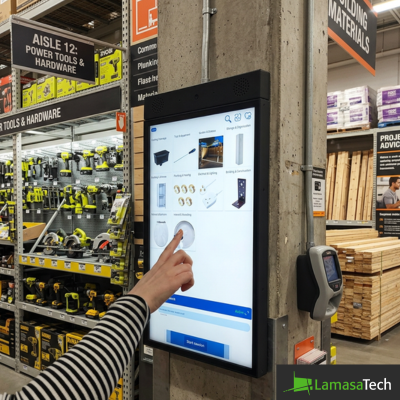
To find out how an AI-powered kiosk could transform your customer service experience, click the button below.
Interested in finding out more about our AI-powered customer service software?
Schedule a Demo
The right kiosk for you
The kiosk industry is only going to keep developing. Automating services is now expected by both customers and employees; they want reduced waiting times and faster check-in and payment processes. Each of the kiosks mentioned above can help achieve these goals, whether that’s guiding your customers to where they want to be, streamlining payments, or welcoming visitors with a seamless sign-in experience.
Here at LamasaTech, we know our kiosks. If you are interested in finding out more about using kiosks in your business, don’t wait to get in touch. We are here to help.
Let’s discuss your kiosk project