


Choosing the right video wall for your business comes down to more than just screen size. From image quality and bezel design to long-term costs and ease of maintenance, the decision between LED and LCD video walls has real consequences for your investment.
This guide breaks down the key differences between LED and LCD video walls in 2026, so you can make an informed decision.
How do you choose a display with all of this information to consider, though? Keep reading to find out.
Jump to:
How will you display your content?
Emerging Technologies & High-End Standards in 2026
What’s the difference?
To start with, all LED displays are just LCDs. Both use Liquid Crystal Display (LCD) technology. The key distinction lies in how they generate light.
LCD Video Walls
An LCD video wall is composed of multiple flat-panel displays arranged in a grid, each with a fluorescent or LED backlight behind a liquid crystal layer. Individual panels are housed in slim bezels and mounted together to create a seamless tiled display. Modern LCD panels use LED backlighting, giving them improved brightness and energy efficiency over older fluorescent models.
LCD video walls are specifically engineered for video wall use, with ultra-thin bezels, portrait and landscape mounting, and high-performance processors built for 24/7 operation. They are the dominant choice for indoor commercial environments globally.
LED Video Walls
Direct-view LED walls use individual light-emitting diodes as the pixels themselves, rather than as a backlight. LED cabinets tile together without a physical bezel, creating a seamless surface. They can achieve very high brightness levels and are available in both indoor and outdoor configurations.
However, they carry a significantly higher price tag, require specialist installation, and are best suited to environments where seamless visuals from a distance — or outdoor deployment — are a priority.
Get in touch today, and our team of experts can help you with your LCD or LED video wall requirements.
Full Comparison: LCD vs. LED Video Wall (2026)
Explore our range of video walls here, or contact us today and tell us about your video wall project.
| LCD Video Wall | LED Video Wall | |
| Cost (2026) | From £5,000–£40,000 Lower upfront investment | From £40,000–£150,000+ Higher upfront cost |
| Lighting type | A series of lamps at the back of the screen. These are spread evenly, giving a consistent display. LCDs are unable to do local dimming due to the display producing consistent lighting. | Full array- even distribution of LEDs across the screen. This allows for local dimming that improves image quality by creating more contrast. |
| Resolution | Full HD (1920×1080) per panel Excellent for close viewing | Varies by pixel pitch 960×540 to 1920×1080 per cabinet |
| Size | LCD screens are larger, restricting the space they can be combined in. Can create large displays but has a limit. | LED panels are smaller and can be combined in unique ways to fit any size required. |
| Lifespan | 50,000+ hours (5–7 years) Easily replaced panel-by-panel | 100,000+ hours (11+ years) Higher replacement cost per unit |
| Brightness | 500–1,000 nits Ideal for controlled indoor spaces | 1,000–10,000+ nits High ambient light / outdoor |
| Indoor/Outdoor use | Suitable for indoor use only | Some LED displays are designed for indoor use only. Others are made to be used outside and will have an IP rating identifying how weather-resistant they are, ideally, you’ll want an IP65-rated display. |
| Contrast | 1500:1 (uniform backlight) | 5000:1 (local dimming) |
| Emerging Tech | Ultra-narrow bezel, 4k panels | MicroLED, COB, fine-pitch HDR |
Quick Reference Table: Viewing Distance, Brightness & Bezel (2026)
Use this at-a-glance table to match your environment to the right display specification:
| Display Type | Minimum Viewing Distance | Brightness (nits) | Bezel Size |
| Indoor fine-pitch | 1.5m+ | 800-1,500 nits | Zero (Seamless) |
| Indoor Standard | 2.5m+ | 1,000-3,000 nits | Zero (Seamless) |
| Outdoor LED | 4m-10m+ | 4,000-10,000 nits | Zero (Seamless) |
| LCD Narrow Bezel | 0.5m+ | 500-700 nits | 3.5mm |
| LCD Ultra-Narrow Bezel | 0.5m+ | 700-1,000 nits | 0.44mm |
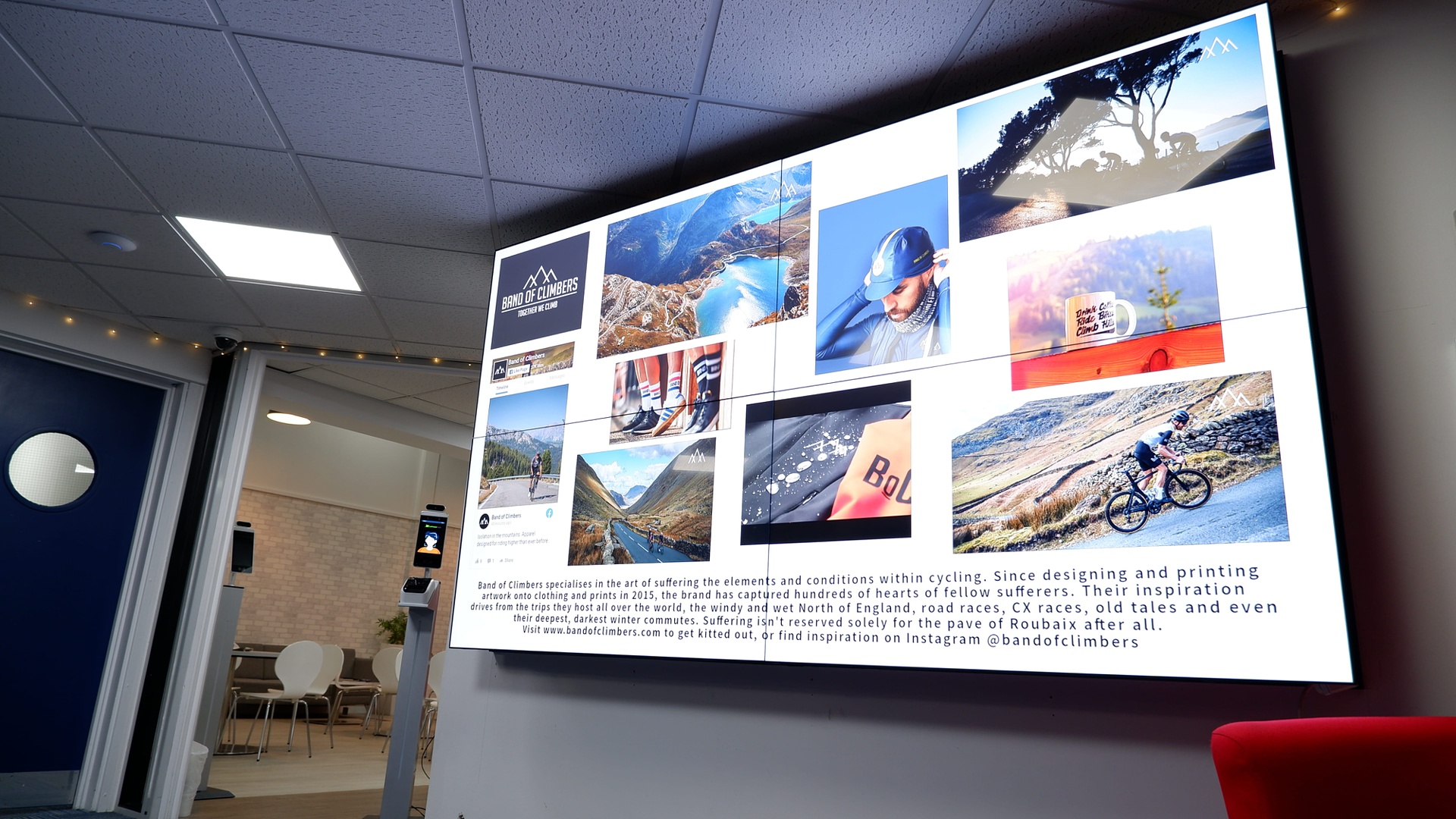
Picture quality
Image quality is one of the most contentious issues when it comes to the LED vs. LCD video wall debate. LED displays generally have better picture quality compared to their LCD counterparts. From black levels to contrast and even colour accuracy, LED displays usually come out on top. LED screens with a full-array back-lit display capable of local dimming will provide the best picture quality.
In terms of viewing angle, there is usually no difference between LCD and LED video walls. This instead depends on the quality of the glass panel used.
Bezel
One of the main differences and biggest considerations when picking between an LCD and an LED video wall is the bezel.
LCD
If you go with an LCD display you will need to consider the bezel size. The bezel is the frame that goes around the edge of a single LCD panel. When you bring each panel together to form your video wall, the bezel is where each screen will meet. This will be visible when looking at your video wall, as you’ll see a thin black line where each panel connects to another.
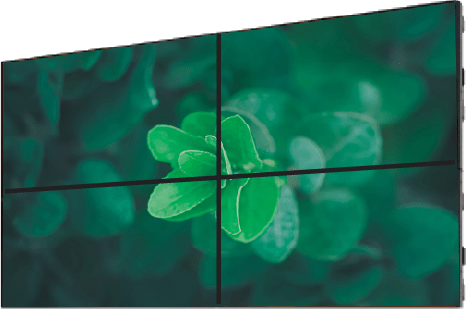
When looking for an LCD video wall, you will see the bezel sizes listed for the panels. The larger the bezel size the thicker the black bar between the panels will be. Depending on the content you wish to display, this can affect the viewing experience. One large continuous image or a lot of data would be most clearly affected by the bezel.
However, with recent advancements in bezel reduction technology, video wall providers are now able to provide LCD displays with very narrow and in some cases almost unnoticeable bezels. LamasaTech offers a narrow 3.5mm bezel LCD video wall as well as an extremely thin 0.44mm bezel display.
LED
LED displays do not have a bezel, so no black frame will appear between each LED cabinet. This produces a seamless display and allows you to show your content uninterrupted. This is an effective setup when you are expecting to display a single image or video across the entire video wall.
Below you can see a comparison of an LCD display with bezels and an LED video wall without.
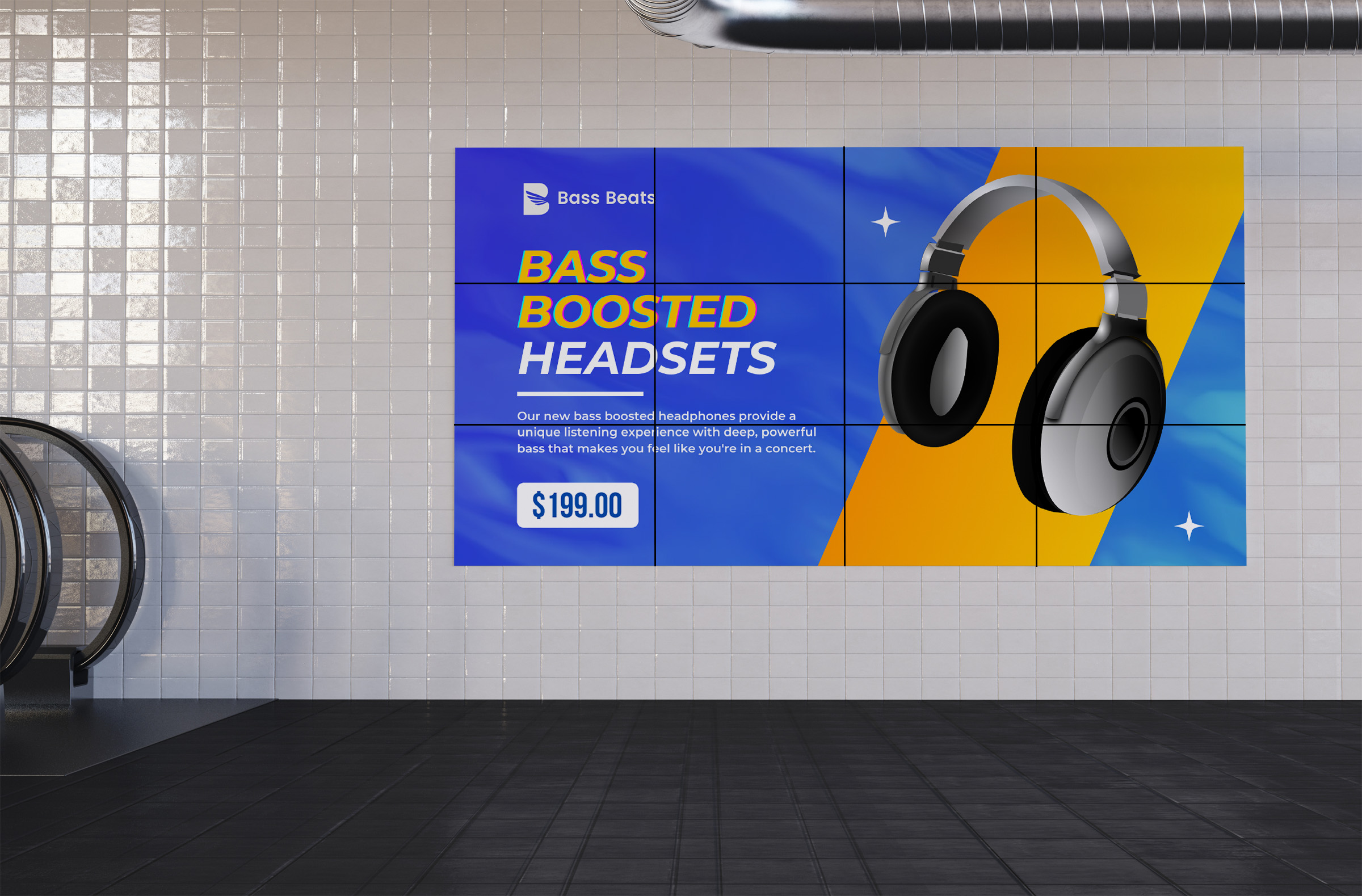
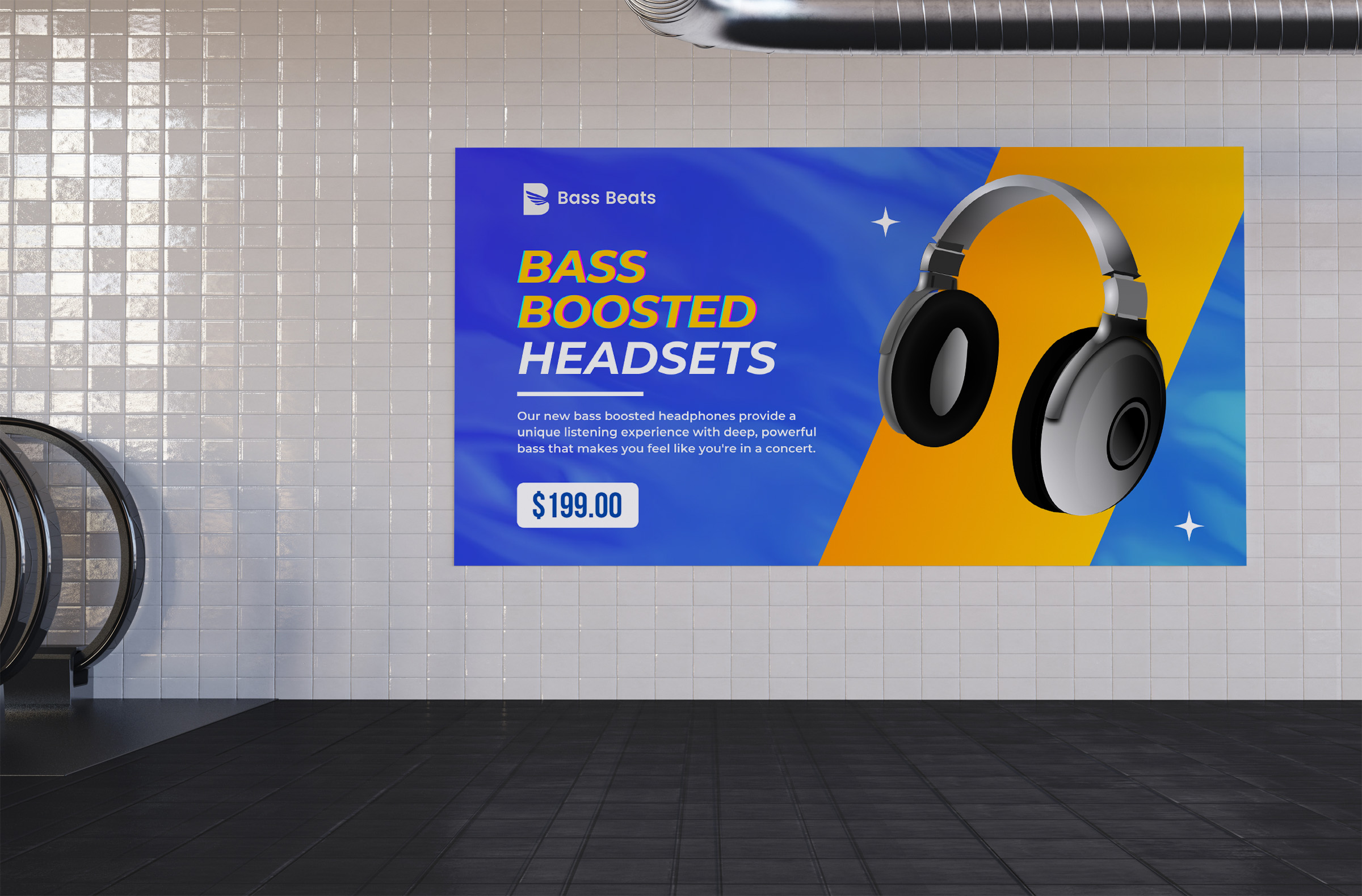
LamsaTech provides seamless LED video walls, get in touch today to discuss your display requirements.
Resolution
Resolution affects the sharpness and clarity of the content displayed on a screen. This is particularly important for video walls as it will determine the appropriate viewing distance.
A higher resolution will keep your content looking clear while being viewed up close from a short distance away, while a lower resolution video wall will be better viewed from further away. This ties in with the pixel pitch which will be explained in the next section.
LCD displays offer a much higher resolution when compared to LED options. A 55″ LCD display will offer 1920 x 1080 resolution. When your video wall is completed, the total resolution of your wall will depend on how many panels it includes. For example, a 3×4 LCD video wall will have a total resolution of 5760 x 4320.
As LEDs can have differing pixel pitches their resolutions will vary. An LED with a pixel pitch of 1.26 will have a resolution of 960 x 540. Over the same 3×4 video wall display, this LED would offer a total resolution of 2880 x 2160.
With a much higher resolution, this makes LCDs ideal for indoor viewing. They’ll be able to maintain a clear and detailed image while being viewed from a short viewing distance, for example in a security and control room, simulation room, education facilities and more.
LED video walls are a great choice for outdoor locations where the display will be viewed from a distance, meaning that the resolution is less important. LEDs are also a great choice for indoor environments if you are looking for a video wall with no bezel and the audience will be viewing the display from a distance, making the resolution slightly less important.
Contact our team of experts today and we’ll help you implement your video wall.
Pixel pitch
Pixel pitch is the distance between each pixel on an LED panel. The higher the pixel pitch the greater the spacing between the LEDs which will result in lower image quality, while a lower pixel pitch will offer a higher image quality. This will be especially noticeable in close-up viewing environments such as a board room or reception because the details of the content will be lost and viewers will begin to see individual pixels and not a clear cohesive image.
Understanding what pixel pitch you would require for an LED video wall in your chosen location typically requires input from technical specialists. However, here are two you can calculate this yourself.
- Multiply the pixel pitch of an LED display by 3 to get the minimum distance in feet a viewer must be from the wall to be able to interpret the content
- Multiply the pixel pitch of an LED display by 10 for the ideal viewing experience
For example, an LED display with a pixel pitch of 5mm would require a viewer to be 15 feet away to make out any details in the video wall and 50 feet away to clearly view the content.
LCD displays have a much smaller pixel pitch than LED displays, which makes an LCD video wall ideal for showing more informative and detailed content. If your video wall is to be placed in a control room, conference room or reception area, then an LCD display will provide a high-quality experience for this close-distance viewing.
Size
Where the display is going to be placed and the size needed are significant factors in which screen is right for you.
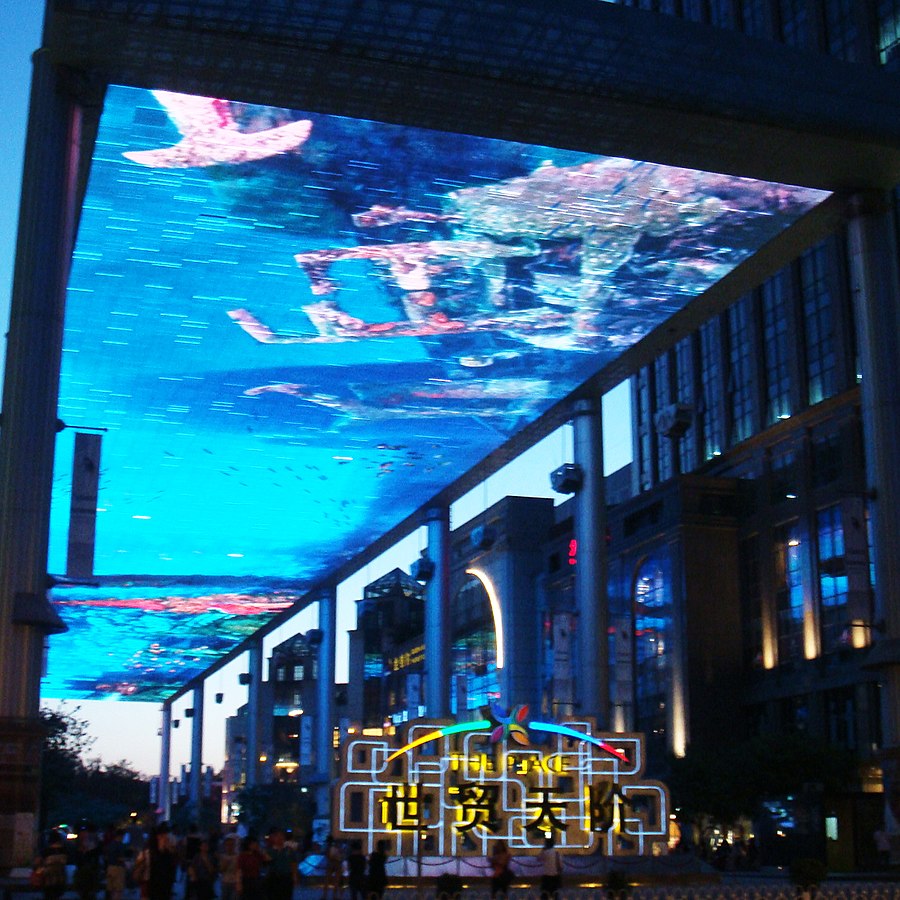
LCD video walls typically aren’t made as large as LED walls. Depending on the need, they can be configured differently but won’t go to the huge sizes LED walls can. LEDs can be as big as you need, one of the largest is in Beijing, which measures 250 m x 30 m (820 ft x 98 ft) for a total surface area of 7,500 m² (80,729 ft²). This display is made up of five extremely large LED screens to produce one continuous image.
Let us know the size of your video wall project and we’ll offer you expert guidance on how you can proceed.
Brightness
Where you will be displaying your video wall will inform you of how bright you need the screens to be.
Higher brightness will be needed in a room with large windows and lots of light. However, in many control rooms being too bright will likely be a negative. If your employees are working around it for long periods they could suffer from headaches or eye strain. In this situation, an LCD would be the better option as there is no need for a particularly high brightness level.
Contrast
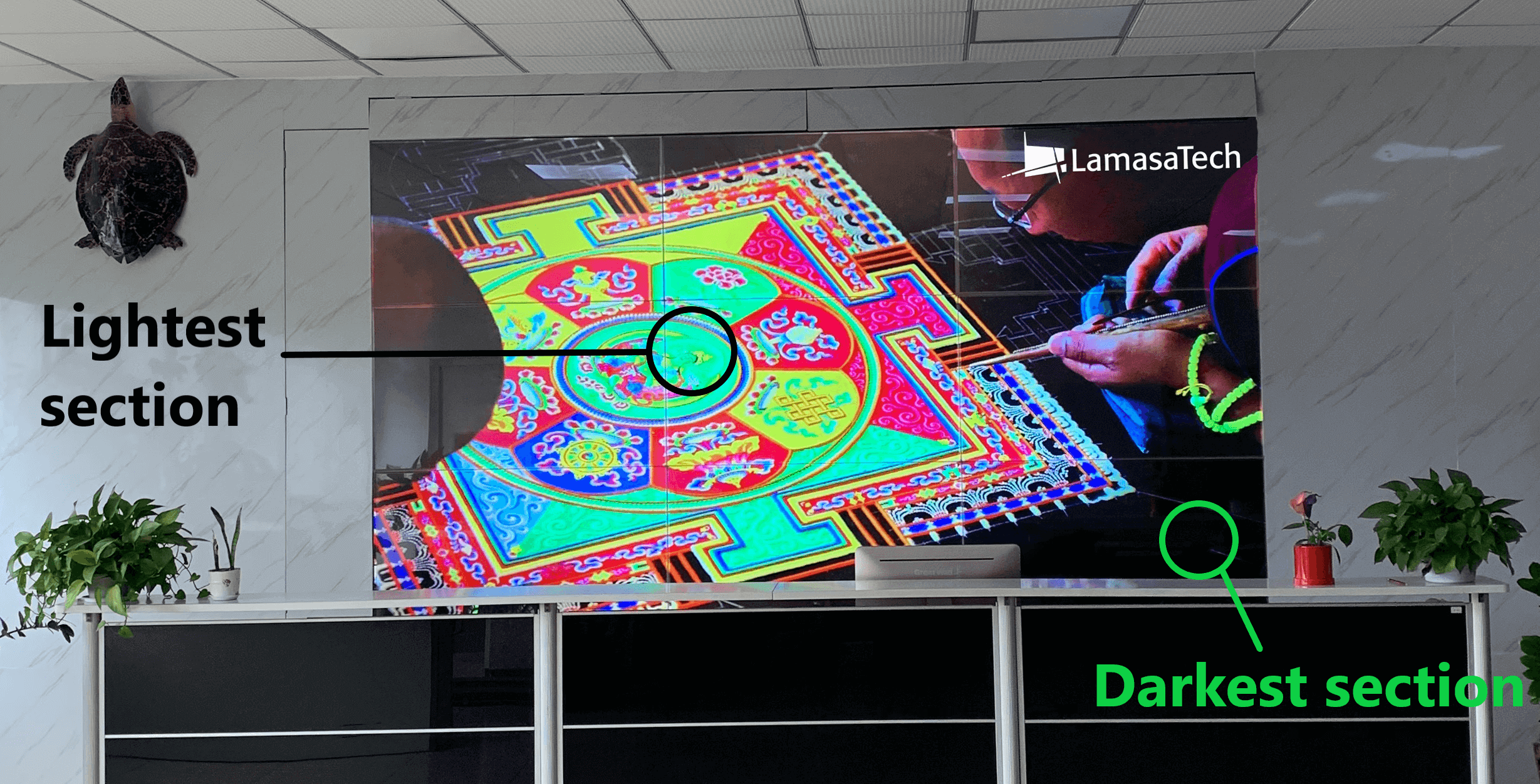
Contrast is also something to consider. This is the difference between the screen’s brightest and darkest colours. The typical contrast ratio for LCD displays is 1500:1, while LEDs can achieve 5000:1. Full-array backlit LEDs can offer high brightness due to the backlighting but also a truer black with local dimming.
Location
LCDs
It is important to note that the location of your video wall will impact which option is best for you. LCD video walls are made for indoor environments and are most suitable in locations such as:
- Reception areas
- Control rooms
- Lecture halls
- Meeting rooms
LEDs
Some LED video walls are designed for indoor use while others are made for outdoor environments. A key detail to look out for with an outdoor LED video wall is the IP rating. This identifies how weather-resistant it is and how well it will cope with outdoor conditions. IP 65 is the rating you should look for as this will mean your LED display will be able to handle operating outside. Ideal outdoor locations for LED video walls include:
- Roadsides
- Stadium/venue entrances
- Attached to the side of a building
Cost
If your main concern is budget, then LCD is the obvious choice. You can usually buy a much bigger LCD display for vastly less money than an LED. LCD video walls are generally much cheaper compared to similar-sized LED displays. The low-end average for an LCD video wall is $5,000-$6,000, while an LED display will cost you $40,000-$50,000.
This is the same when it comes to maintenance. LED screens are more expensive to maintain compared to LCD displays.
Energy Efficiency
LCD video walls are among the most energy-efficient large-format display solutions available. A commercial 55″ LCD panel typically consumes around 250W at peak brightness — significantly lower than comparable LED cabinets, which draw 400–800W/m². For a large installation running 10–12 hours per day, the energy saving across an LCD array versus an equivalent LED wall can be substantial.
Newer LCD panels with LED backlighting and automatic brightness control further reduce consumption — in many installations, real-world energy use is 30–40% below the rated maximum.
For most organisations operating on a 5–7 year refresh cycle, LCD delivers a lower total cost of ownership than LED. The higher upfront cost of LED is only offset by its longer lifespan for organisations planning a single installation with a 10+ year horizon.
How will you display your content?
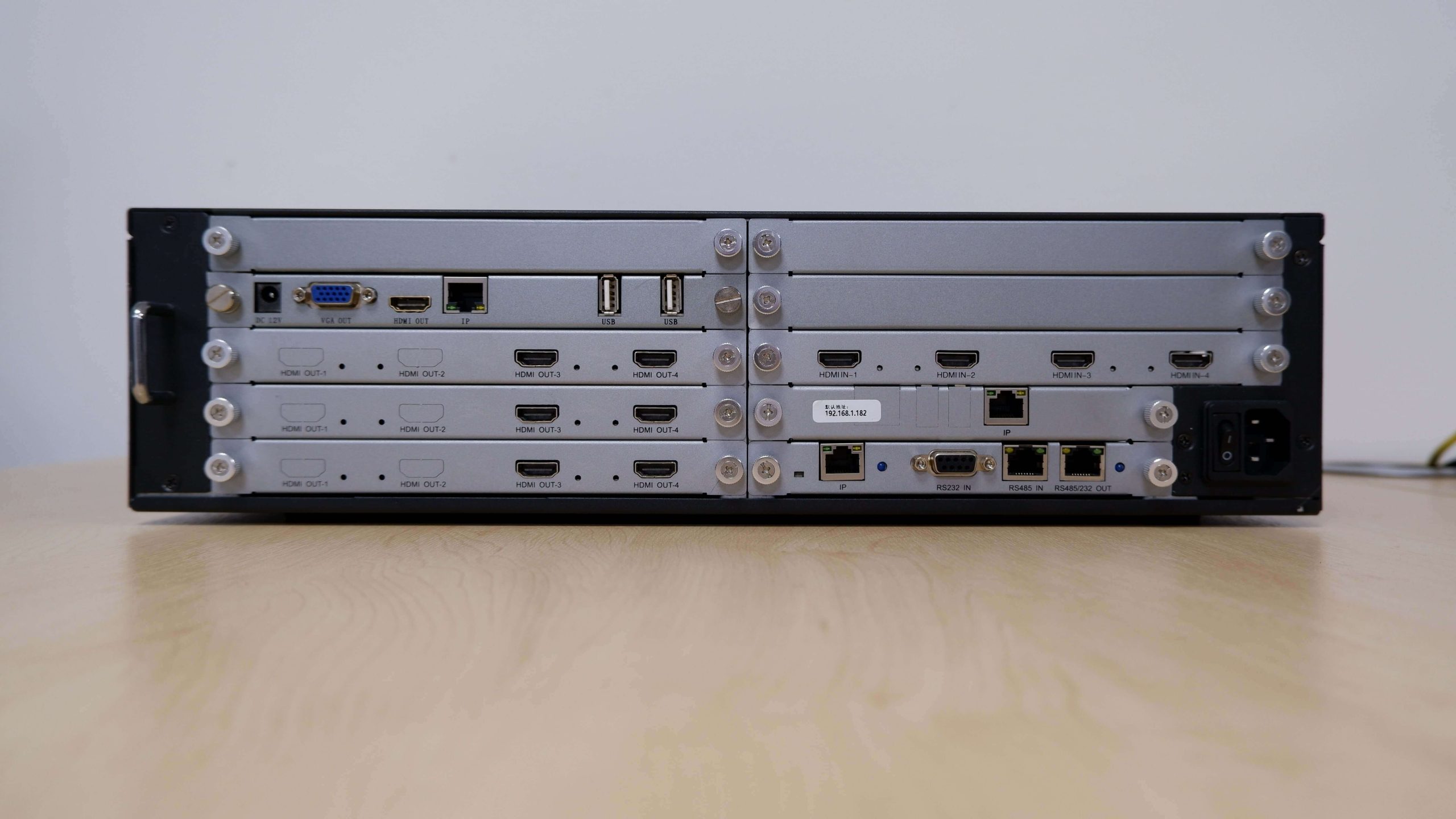
With both LCD and LED you’ll be able to daisy chain your screens or connect a video wall processor. Daisy chaining involves connecting an input, such as a media player to one screen and then linking the remaining screens together. You’ll then be able to display the content from the input across your display.
A video wall processor offers more control and customisation as it comes with built-in software. Your chosen video wall will be connected to the processor and then you’ll be able to drag and drop content around the display and even resize it to fit your requirements.
To learn more about video wall processors and how they work, read this article.
Emerging Technologies & High-End Standards in 2026
The video wall industry is moving quickly. Whether you are investing now or planning, it is worth understanding the technologies shaping the high end of the market, both to future-proof your procurement decisions and to appreciate why video walls continue to represent outstanding value in 2026.
MicroLED: The Premium Frontier
MicroLED is the most talked-about advancement in display technology heading into 2026. Unlike conventional LED, which uses diodes as a backlight behind an LCD panel, MicroLED makes each pixel a self-emitting light source. This means every pixel can switch on and off independently, enabling near-infinite contrast, true blacks, and exceptional colour accuracy without the burn-in risk associated with OLED.
MiniLED & COB: Raising the LED Bar
MiniLED technology uses thousands of smaller LEDs as a backlight, significantly more than conventional LED backlighting, enabling far more precise local dimming zones. The result is contrast and black levels that approach OLED quality, combined with high peak brightness, and without the burn-in concerns associated with OLED panels.
COB (Chip-on-Board) technology takes a different approach, embedding LED chips directly onto a substrate beneath a protective layer. This design is more physically robust, reduces light leakage between pixels, and enables lower pixel pitches than traditional surface-mounted LED designs. COB is becoming the preferred specification for 24/7 control room and command centre deployments where reliability and image consistency are paramount.
Micro RGB: The Next Generation of LCD Backlighting
Rather than using white LEDs as a backlight (as in conventional and MiniLED designs), Micro RGB uses microscopic individual red, green, and blue LEDs. This allows for far more precise colour and brightness control at the sub-pixel level.
Micro RGB sits between MiniLED and full MicroLED in terms of cost and capability. This technology is currently entering the premium consumer market and is expected to filter into commercial video wall panels over the next 12–24 months.
AI-Driven Calibration & Predictive Maintenance
AI is increasingly embedded in video wall management systems in 2026. For high-end installations, this means:
- Automatic colour and brightness calibration across multi-panel arrays, compensating for natural variation as panels age
- Predictive maintenance alerts – flagging potential faults before they cause visible issues or downtime
- Ambient light sensing that automatically adjusts brightness and contrast to match changing room conditions throughout the day
- AI upscaling – lower resolution source content is intelligently enhanced in real time for display on high-resolution walls.
These capabilities reduce on-site service requirements and help organisations get more from their investment over the display’s operational life.
Next steps: Is an LCD Video Wall Right for You?
If your project involves an indoor environment, a defined budget, and a requirement for high-quality imagery viewed at close to medium distances, an LCD video wall from LamasaTech is almost certainly the right solution.
Choose an LCD video wall if:
- Your installation is indoors
- Viewers will be within 0.5–5 metres of the display
- You want the best image quality per pound invested
- Low running costs and simple maintenance are priorities
- You need a reliable, proven technology backed by expert support
LED may be more appropriate if:
- Your installation is outdoors or in very high ambient light
- Viewing distances exceed 10 metres and a zero-bezel canvas is essential
- Budget is not a primary constraint and a 10+ year lifespan is planned